for race teams / race / organizers / track ownwers and race fans.
Daily / Weekly / Monthly
All Motorola radios and Racing Communications accessories.
By the industry to deliver quality affordable products.
of experience serving racing teams around the world.
Top quality Racing Radios USA and Motorola products.
Sold, guaranteed and serviced in Canada.
Investing in high-quality racing radios is a strategic decision that pays dividends in performance and reliability. By choosing radios that offer advanced features, durable construction, and seamless integration with existing equipment, teams can enhance their communication strategy. The benefits of effective communication—improved safety, better strategy execution, and increased team coordination—are invaluable in the high-stakes world of motorsport. Ensuring that the chosen radios meet the specific needs and demands of the team is crucial for maximizing their impact.
When choosing racing radios, it’s important to evaluate key features such as range, audio quality, battery life, and ease of use. The range should be sufficient to cover the entire track or rally stage, ensuring uninterrupted communication. High audio quality and effective noise-cancellation are essential for clear communication in noisy environments. Long battery life is crucial for endurance events, minimizing the need for frequent recharging or battery replacements. User-friendly interfaces and controls make it easier for team members to operate the radios, especially under pressure. Evaluating these features helps identify radios that offer the best performance and reliability for the team’s needs.
Noise cancelling Microphone
All such microphones have at least two ports through which sound enters; a front port normally oriented toward the desired sound and another port that’s more distant. The microphone’s diaphragm is placed between the two ports; sound arriving from an ambient sound field reaches both ports more or less equally. Sound that’s much closer to the front port than to the rear will make more of a pressure gradient between the front and back of the diaphragm, causing it to move more. The microphone’s proximity effect is adjusted so that flat frequency response is achieved for sound sources very close to the front of the mic – typically 1 to 3 cm. Sounds arriving from other angles are subject to steep midrange and bass rolloff. Commercially and militarily useful noise-canceling microphones have been made since at least 1935 (Amelia Earhart used one on her 1935 flight from Hawaii to California) and have been made since the 1940s by Roanwell, Electro-Voice and others.
in radio communication, an omnidirectional antenna is a class of antenna which radiates equal radio power in all directions perpendicular to an axis (azimuthal directions), with power varying with angle to the axis (elevation angle), declining to zero on the axis. When graphed in three dimensions (see graph) this radiation pattern is often described as doughnut-shaped. Note that this is different from an isotropic antenna, which radiates equal power in all directions, having a spherical radiation pattern. Omnidirectional antennas oriented vertically are widely used for nondirectional antennas on the surface of the Earth because they radiate equally in all horizontal directions, while the power radiated drops off with elevation angle so little radio energy is aimed into the sky or down toward the earth and wasted. Omnidirectional antennas are widely used for radio broadcasting antennas, and in mobile devices that use radio such as cell phones, FM radios, walkie-talkies,

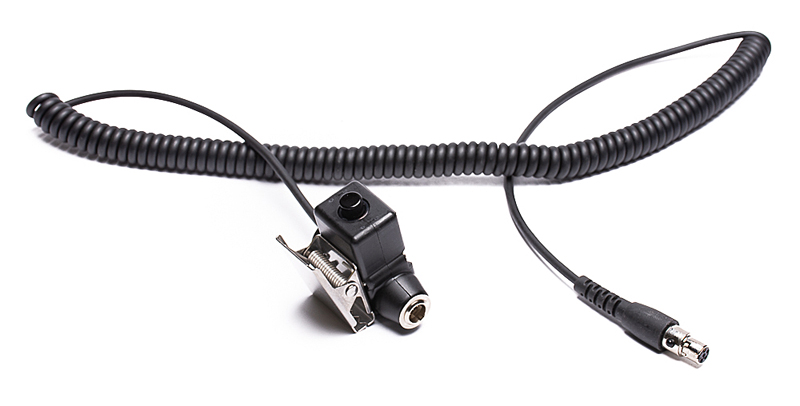
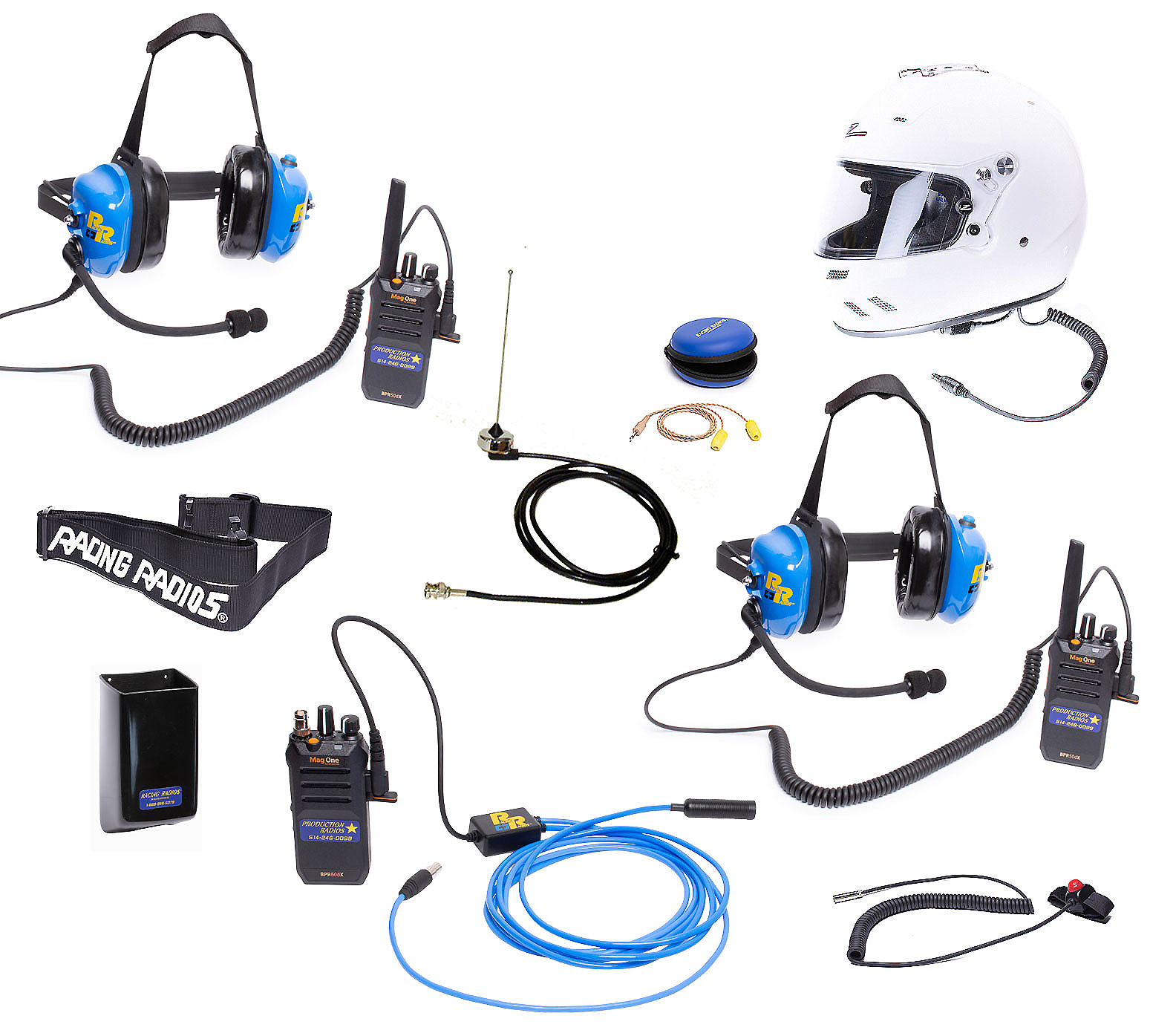
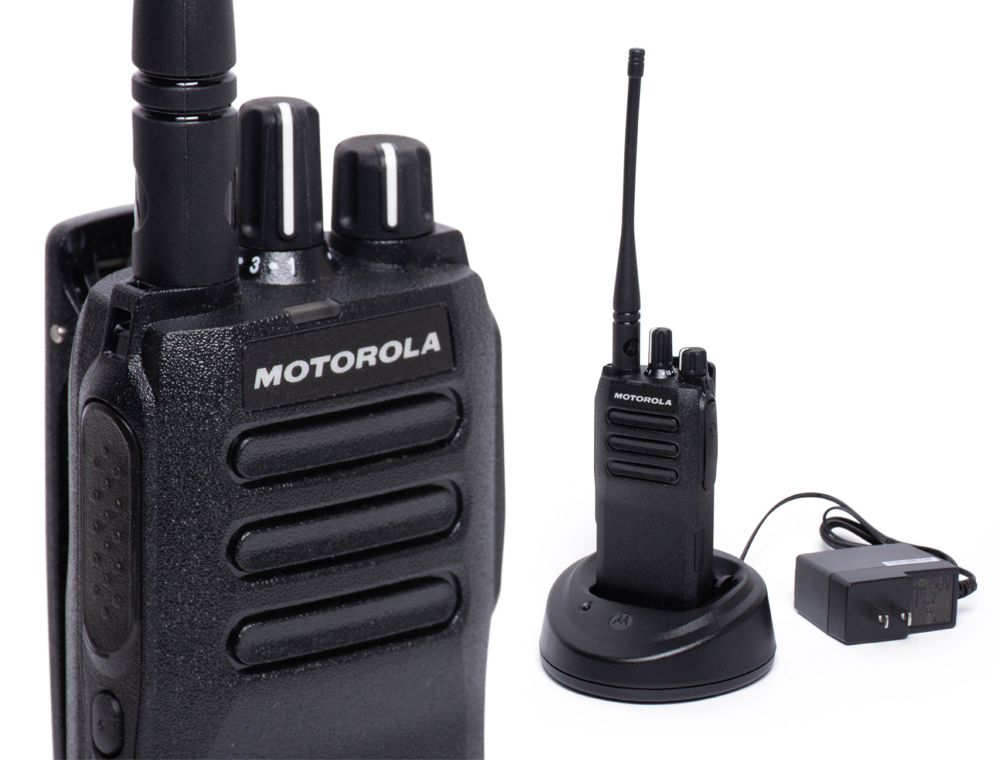

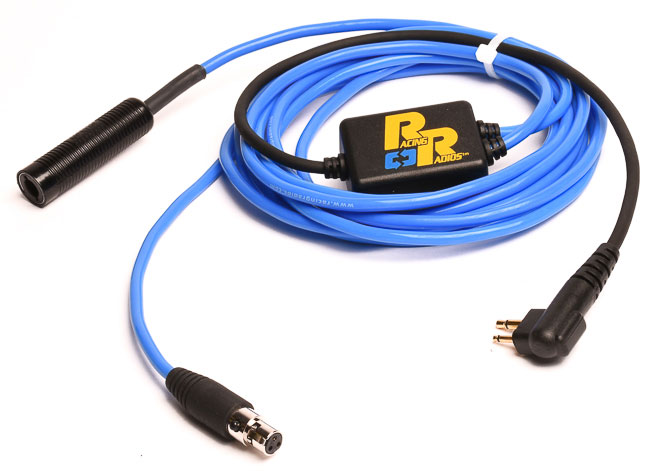
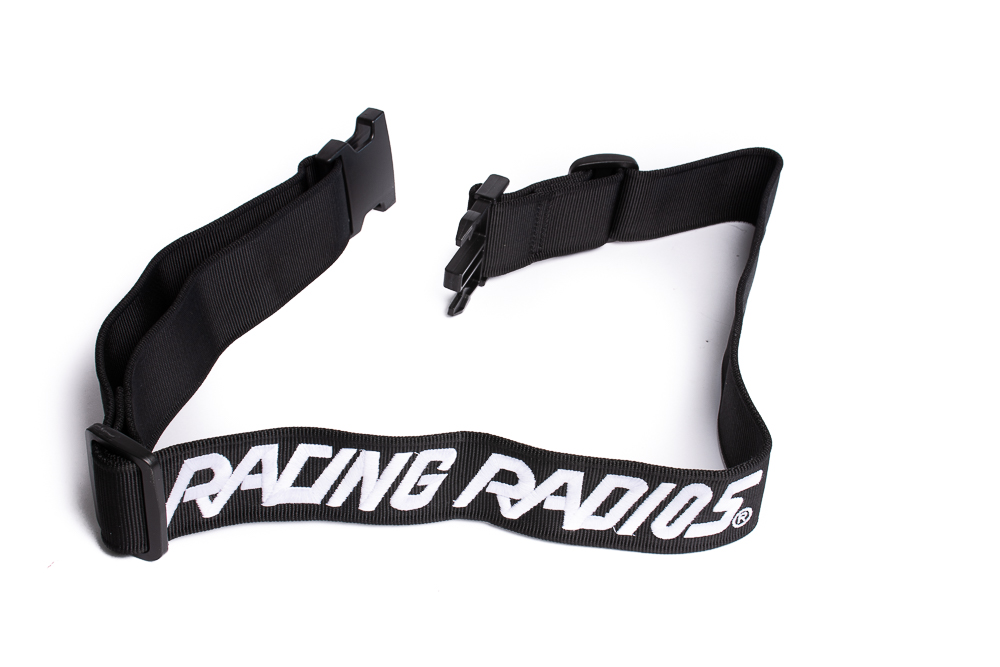

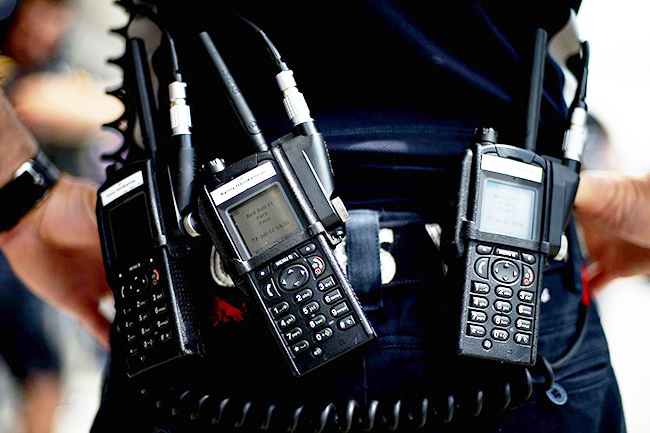

Whether you’re a driver, a crewmember, or racing team principal, we can help you choose the right radio system for your style of racing or accessories to complete your existing setup.
Contact us and our team will be happy to assist you.